

In the ever-dynamic landscape of cryptocurrency, monitoring key metrics can provide invaluable insights into market trends and investor behavior. Recent data unveils noteworthy changes in the Bitcoin ($BTC) ecosystem, suggesting significant shifts that might have far-reaching implications.
One striking revelation is the recent dip in the balance of Bitcoin on exchanges. The figure has reached a remarkable 5-year low, with only 2,260,638.267 BTC currently held on trading platforms. This data indicates a shift in the distribution of Bitcoin holdings, possibly pointing towards increased adoption or a growing preference for non-custodial wallets.
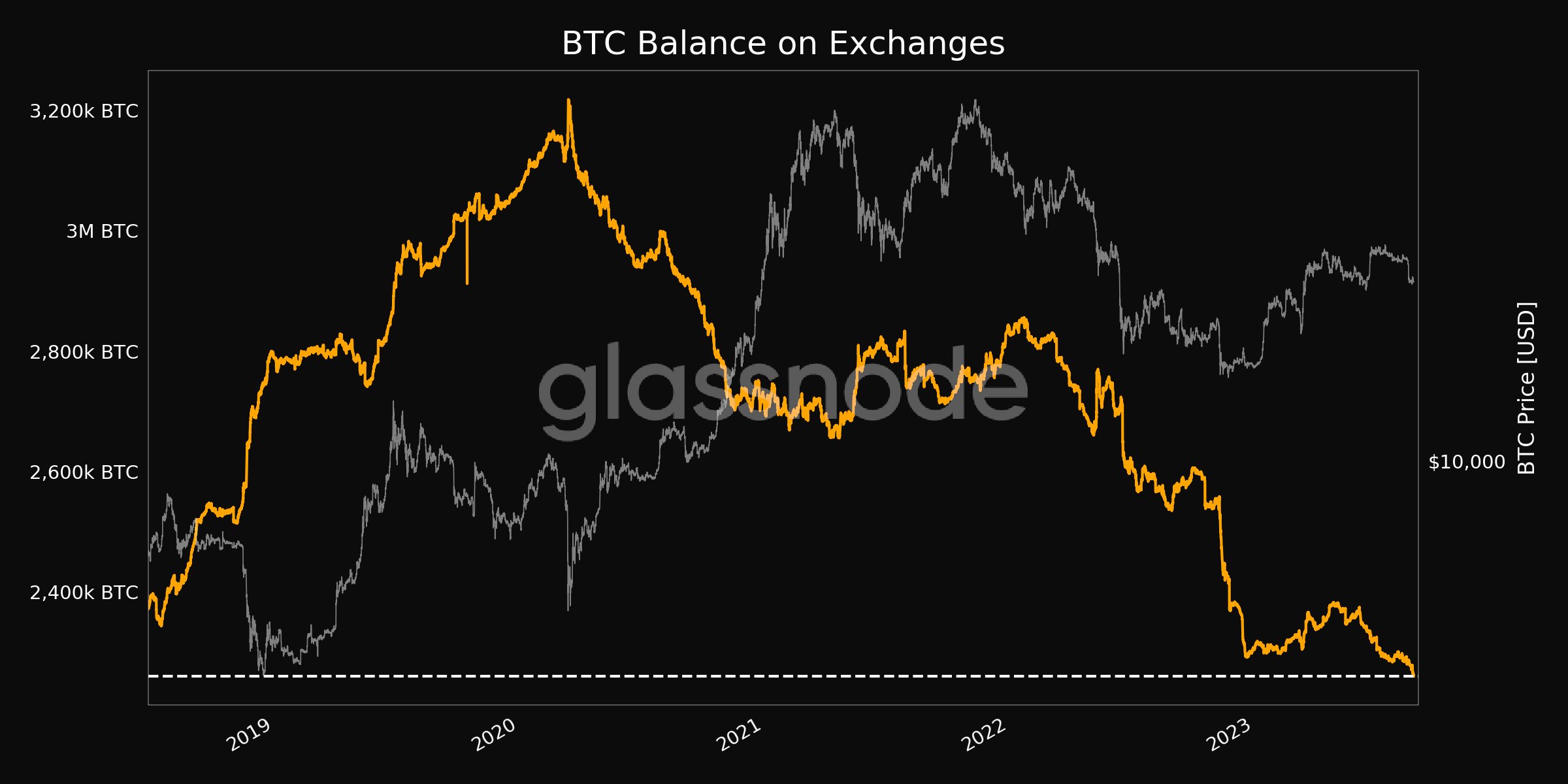
Interestingly, a similar low of 2,261,717.981 BTC was recorded on August 24, 2023, implying a potential trend towards sustained reduction in exchange-based Bitcoin balances. This observation raises intriguing questions about the factors contributing to this movement, whether it's driven by shifts in trading strategies or broader market sentiments.
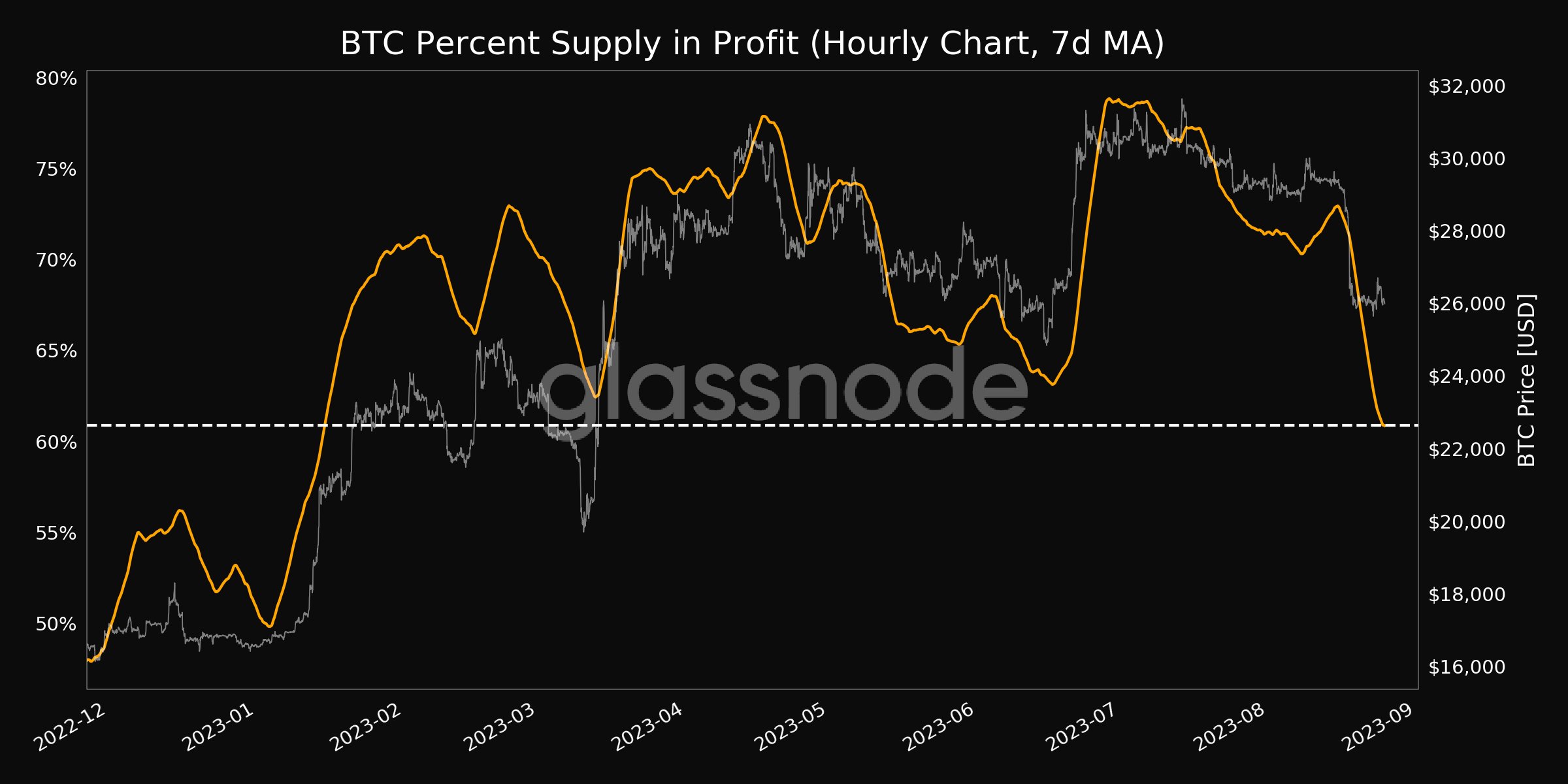
Moreover, the percentage of Bitcoin's supply in profit, measured over a 7-day moving average, has reached its lowest point in 7 months, standing at 60.870%. This particular metric often reflects the confidence of long-term holders, as well as the overall health of the market. Such a decline might indicate a period of profit-taking or potential adjustments in trading strategies among investors.
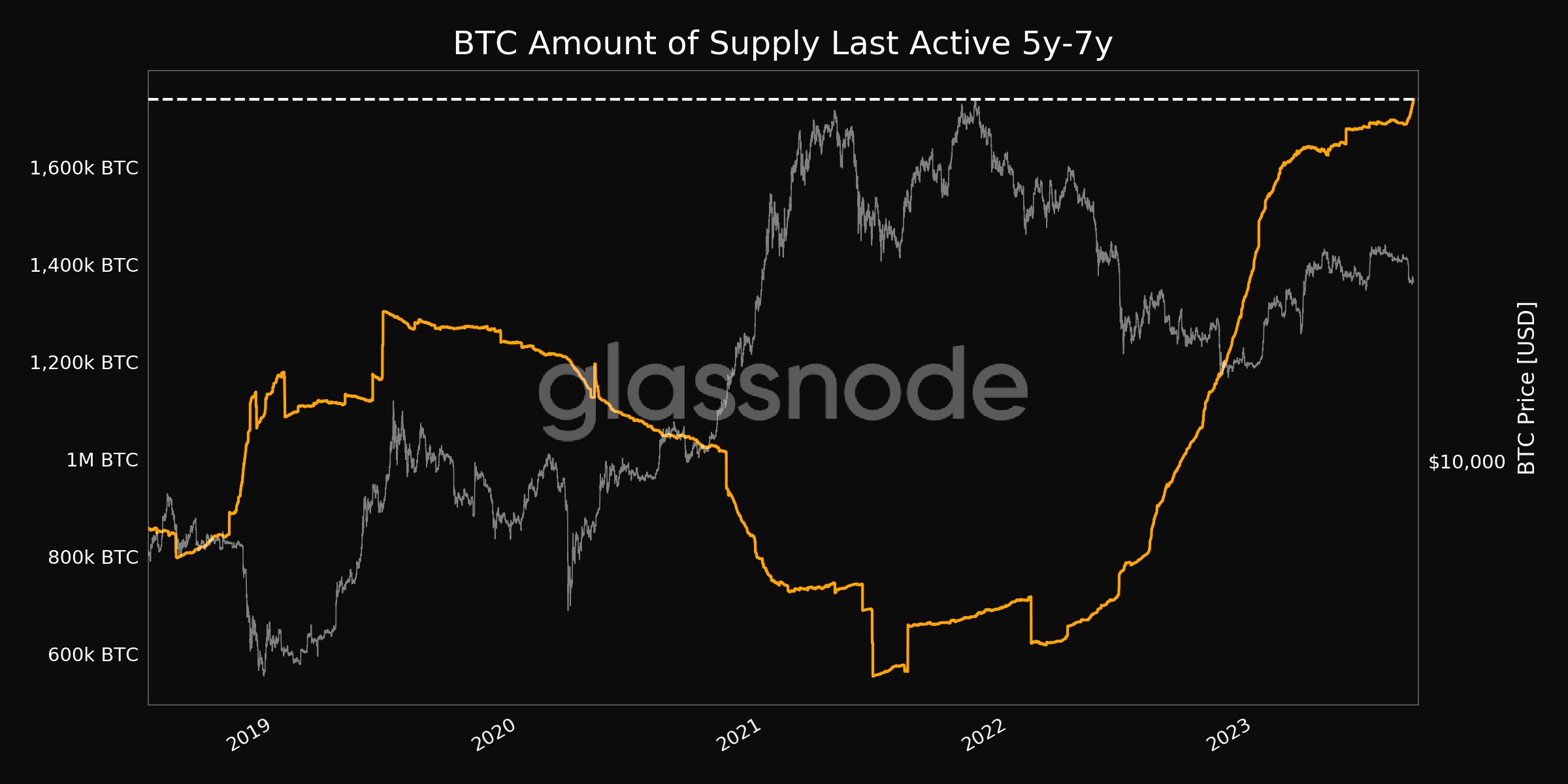
On a contrasting note, there's a remarkable upward trend in the amount of Bitcoin supply that has become active after lying dormant for 5 to 7 years. This metric has recently hit a 5-year peak, with 1,738,798.650 BTC re-entering circulation. Notably, a previous high of 1,738,309.547 BTC was documented on August 24, 2023. This surge could signify a range of scenarios, from long-term holders capitalizing on price peaks to a renewed interest in older Bitcoin holdings.
In conclusion, these metrics collectively paint a picture of the ongoing shifts in the Bitcoin market. While the decreased supply on exchanges might signal changing dynamics in ownership and storage preferences, the decreased percentage of supply in profit could point towards evolving investor behavior. Simultaneously, the influx of previously inactive Bitcoin hints at a possible reshaping of strategies and outlooks in response to the market's ever-changing nature.
For those interested in delving deeper into these metrics and their implications, the provided links lead to the original data sources for a comprehensive understanding of the trends shaping the Bitcoin landscape.


